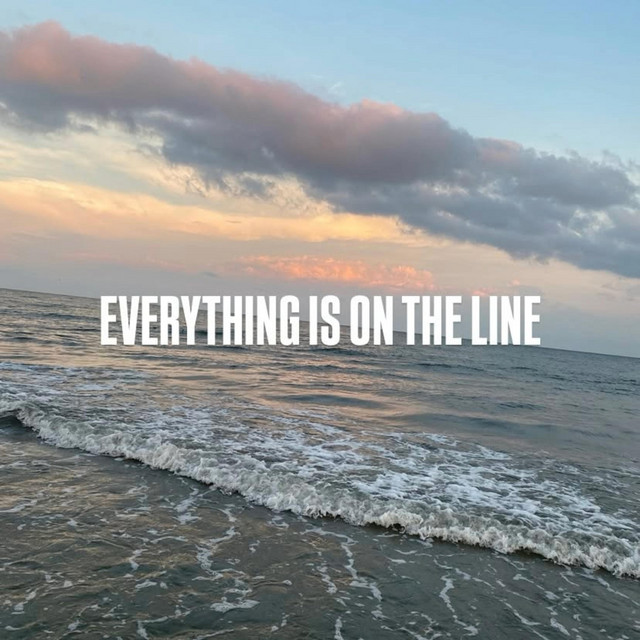
“Everything Is On The Line” by Tristan Cline opens with an immediate sense of urgency, establishing a powerful instrumental identity built around tension, movement, and controlled force. Rather than relying on vocals to define its emotional direction, the track places the guitar at the center of its expression, allowing the instrument to carry both the melodic and emotional weight of the composition. The saturated guitar tones and assertive riffing create a strong foundation from the opening moments, giving the piece a feeling of constant forward motion. Every phrase feels purposeful, as though each note is contributing to a larger buildup of pressure and intensity.
The production is built around a dense yet carefully balanced instrumental arrangement where every element contributes to the track’s aggressive momentum. The guitar tones maintain a powerful distortion while preserving enough clarity for each riff and lead phrase to remain distinct. The drums provide a forceful rhythmic backbone through precise patterns, controlled accents, and dynamic cymbal work that adds moments of brightness and instability within the heavier sections. Beneath it all, the bass delivers additional weight and depth, ensuring the composition carries a physical impact that extends beyond the surface. This balance between heaviness and definition allows the track to feel massive without becoming overwhelming, creating a sound that is both intense and carefully structured.
The guitar performance in “Everything Is On The Line” serves as the emotional voice of the composition, replacing traditional vocal expression with detailed phrasing and dynamic movement. The sustained notes, sharp transitions, and shifting between rhythmic power and melodic focus create a sense of urgency that remains consistent throughout the track. Rather than simply repeating patterns, the guitar continuously develops its ideas, allowing each section to feel like an escalation of the previous one. This expressive approach gives the instrumental arrangement a narrative quality, where tension is communicated through tone, timing, and intensity.
Rhythmically, the track maintains its momentum through accumulation rather than dramatic changes in structure. The driving pulse of the drums and bass creates a foundation that remains steady while the guitars continue to expand and intensify above it. Each transition feels like a natural progression, adding more weight and energy without disrupting the established flow. The controlled layering of instrumentation creates a sense of rising pressure, where the listener feels the track moving forward continuously rather than returning to familiar points. This approach gives the composition a focused identity built around endurance, force, and progression.
Overall, “Everything Is On The Line” succeeds as a powerful instrumental rock statement defined by precision, intensity, and emotional control. The combination of commanding guitar work, dynamic drumming, and a weighty bass foundation creates a cohesive sonic experience where every element serves the same purpose. Tristan Cline transforms raw energy into a structured and immersive composition, proving that instrumental music can communicate urgency and emotion without relying on traditional songwriting elements. The result is a track that feels deliberate from beginning to end, leaving a lasting impression through its relentless drive and carefully crafted intensity.
Tristan Cline: