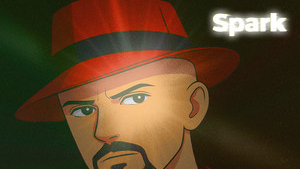
“Spark” by Mister Chorister is a deeply evocative piece of introspection that traces the fragile, often painful journey from creative stagnation toward eventual clarity and renewal. From its opening moments, the song establishes an intimate sonic space built on sparse instrumentation, with the guitar carrying a raw emotional weight that immediately grounds the listener. The lyrical admission, “I don’t know where to start,” alongside the sense of “falling apart,” reflects a state of internal paralysis that feels both deeply personal and universally recognizable. This opening section does not rush its emotional premise, instead allowing vulnerability to settle fully into the listener’s experience.
As the track unfolds, the production becomes an essential storytelling force rather than a mere backdrop. The early minimalist pacing reinforces a feeling of aimlessness, almost mirroring the disorientation of searching for a “signal sent from my heart.” This restrained structure gradually evolves, and the introduction of background vocals by Yen Wolves adds a haunting, ethereal layer that expands the song’s emotional and sonic horizon. That shift feels like a subtle breaking of internal barriers, as if the music itself is beginning to breathe more freely and extend beyond its initial confinement.
Mister Chorister’s vocal performance serves as the emotional spine of the entire composition. In the early verses, his delivery carries a noticeable weariness, as though each phrase is weighed down by uncertainty and fatigue. Yet, as the song progresses, his tone shifts with careful intention, gradually revealing a sense of emergence and renewed direction. This transformation is not abrupt but gently earned, allowing the listener to feel the evolution from confusion into clarity as an organic unfolding rather than a sudden change.
Lyrically, “Spark” relies on vivid natural metaphors to articulate the complexities of creative awakening. The movement from drought-like emptiness to the imagery of “floodgates” opening is particularly powerful, capturing the transition from stagnation into overwhelming abundance of thought and feeling. This shift is further emphasized by the recurring refrain, “I could be your spark,” which evolves from a hesitant expression into a confident declaration of purpose and connection. The repetition transforms the line into both a personal affirmation and an outward-reaching promise.
Ultimately, “Spark” stands as a thoughtfully constructed anthem of creative resilience and emotional rebirth. Its refusal to rush emotional resolution allows the silence and space within the arrangement to carry as much meaning as the sound itself. By the time the track reaches its full emotional bloom, it feels less like a climax and more like a quiet arrival at understanding. It leaves the impression of someone rediscovering their inner light, not in a sudden blaze, but in a steady, enduring glow that persists beyond the song’s final moment.