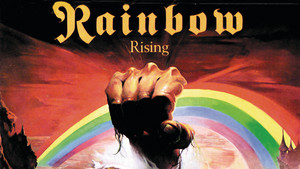
“Stargazer” stands as one of the most ambitious and transformative compositions ever created within the heavy metal genre. Released as the centerpiece of Rainbow’s 1976 album Rising, the track feels less like a conventional rock song and more like a fully realized dark fantasy brought to life through sound. From its opening moments, the atmosphere is overwhelming in scale, combining crushing hard rock instrumentation with a cinematic sense of drama that was almost unprecedented at the time. The song’s structure rejects simplicity, instead unfolding like an epic narrative filled with tension, grandeur, and emotional devastation. Even decades after its release, “Stargazer” remains a defining blueprint for what heavy metal could become when artistry, storytelling, and technical mastery align perfectly.
At the center of this towering achievement is Ronnie James Dio, whose vocal performance is nothing short of legendary. Dio does not simply sing the lyrics; he completely inhabits the perspective of the enslaved narrator, channeling fear, exhaustion, desperation, and awe with remarkable conviction. His voice effortlessly transitions between gritty low-register passages and explosive operatic climaxes, creating a dramatic emotional arc that mirrors the song’s tragic storyline. Lines such as “High noon, oh, I’d sell my soul for water” carry immense emotional weight because Dio delivers them with such raw intensity and theatrical precision. His performance elevates the narrative from fantasy storytelling into something deeply human, making the suffering and hopelessness of the captives feel vividly real.
Instrumentally, “Stargazer” showcases Rainbow operating at the absolute height of their creative powers. Ritchie Blackmore’s guitar work abandons standard blues-rock conventions in favor of exotic, Middle Eastern-inspired scales that give the track its haunting and mystical atmosphere. His riffs feel sharp, calculated, and ritualistic, creating a sense of impending doom throughout the song’s progression. Blackmore’s interplay with Cozy Powell is especially extraordinary, as Powell’s thunderous drumming acts like the relentless heartbeat of the composition. The iconic drum introduction immediately establishes a dark ceremonial mood, and the rhythmic force never loosens its grip. Every section feels meticulously constructed, balancing aggression with atmosphere while constantly driving the narrative forward toward its catastrophic climax.
The inclusion of the Munich Philharmonic Orchestra under producer Martin Birch’s direction adds another dimension of depth and grandeur to the song. Rather than functioning as decorative orchestration, the strings become an essential part of the emotional architecture, filling the music with darkness, tension, and overwhelming scale. The orchestral arrangements intensify the fantasy elements of the story while avoiding excessive theatricality, allowing the heaviness of the band itself to remain dominant. As the narrative reaches its peak, the music becomes increasingly chaotic and overwhelming, mirroring the downfall of the narcissistic sorcerer who believed he could achieve flight. The climax feels both triumphant and horrifying, before the song fades into an eerie sense of emptiness that leaves the listener reflecting on the devastation left behind.
What ultimately makes “Stargazer” such a timeless masterpiece is the way it reshaped the possibilities of heavy metal music. Its influence can be heard across generations of power metal, symphonic metal, and neoclassical metal bands that adopted its emphasis on grandeur, fantasy, and dynamic composition. The song demonstrated that heavy music could be intellectually ambitious without sacrificing power or intensity. Every element, from the storytelling to the orchestration and instrumental performances, contributes to an experience that feels monumental in scope. “Stargazer” is not merely one of the greatest songs of the 1970s; it is a landmark achievement in rock history, a composition that continues to define excellence in heavy music and inspire musicians decades after its creation.