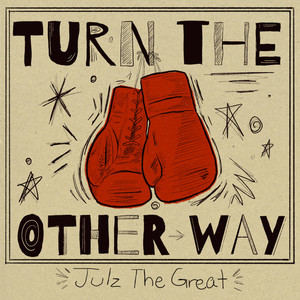
“Turn The Other Way” by Julz The Great is an emotionally compelling examination of interpersonal conflict, emotional exhaustion, and the difficult decision to stop participating in cycles of hostility. Rather than presenting its central conflict through a straightforward victim-versus-villain narrative, the song embraces the uncomfortable grey area where hurt, anger, pride, and personal responsibility coexist. Its greatest strength is the way it captures the psychological moment when fighting back begins to feel less like justice and more like another form of self-destruction. Julz The Great turns that realization into the emotional foundation of the track, presenting “turning the other way” not as weakness or surrender, but as an intentional act of self-preservation. The songwriting therefore carries a strong sense of maturity, allowing the listener to connect with the exhaustion of dealing with people or situations that continually demand emotional energy.
The vocal performance reinforces that emotional progression with impressive control. Julz The Great begins from a conversational and intimate position, creating the impression of someone speaking directly from an internal space rather than performing for an audience. That restrained opening is important because it establishes vulnerability before the song gradually moves toward greater emotional intensity. As the narrative confronts feelings of revenge, frustration, and being pushed toward a breaking point, the delivery becomes more rhythmic and assertive, giving the performance a stronger sense of confrontation. Yet the intensity never loses sight of the song’s deeper purpose. There is a distinction between wanting to retaliate and recognizing that retaliation will only prolong the conflict, and Julz The Great communicates that distinction through the changing vocal character. The result is a performance that feels emotionally dynamic, moving from reflection to defiance before ultimately arriving at a form of quiet resolve.
The production provides a suitably tense environment for this internal battle to unfold. Its sleek atmosphere carries an underlying coldness that complements the emotional distance at the centre of the song, while the carefully positioned instrumental textures prevent the arrangement from overwhelming the storytelling. The use of space becomes particularly effective, giving important lyrical and emotional moments enough room to register before the track moves forward. These melodic breaks create breathing points within the arrangement, allowing the listener to process the narrator’s conflicting thoughts rather than being carried through them without pause. The dynamic movement also mirrors the emotional structure of the songwriting: restrained passages establish introspection, while heightened moments bring the frustration and determination closer to the surface. This balance between atmosphere and momentum gives “Turn The Other Way” a polished sonic identity while ensuring that the production remains firmly connected to the song’s emotional message.
At the heart of the track is a remarkably self-aware lyrical perspective. The admission, “I’d love to play the victim, but I’ve been the enemy,” immediately complicates the narrative by acknowledging personal responsibility within the conflict. It is one of the song’s most revealing moments because it refuses to make emotional pain an excuse for complete innocence. Likewise, the recurring idea of turning away becomes more than a simple instruction; it develops into a mantra for breaking an unhealthy cycle. The declaration, “I’m too proud to surrender,” introduces another layer of contradiction, because the narrator is simultaneously refusing to be defeated and learning that walking away can represent a greater form of strength. This tension gives the writing its emotional weight. Julz The Great understands that peace is not always achieved by winning an argument, exposing an enemy, or delivering the final response. Sometimes it comes from recognizing that continued engagement has become more damaging than disengagement.
Ultimately, “Turn The Other Way” succeeds because it transforms conflict into a story about self-preservation and emotional growth. Its strength comes from the relationship between the introspective songwriting, shifting vocal delivery, atmospheric production, and nuanced understanding of accountability. Julz The Great does not simply document the pain of dealing with hostility; the song examines the psychological struggle involved in deciding what to do with that pain. The track’s central message is therefore deeply relatable: protecting your peace can require more courage than fighting for the last word. By choosing to turn away rather than remain trapped in retaliation, the narrator discovers a different definition of strength, one rooted in boundaries, self-awareness, and emotional freedom. “Turn The Other Way” ultimately stands as a cathartic and thoughtful piece of songwriting, capturing the difficult beauty of knowing when the battle is no longer worth fighting.