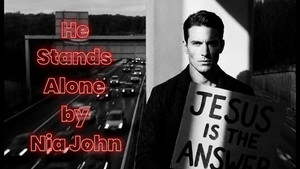
“He Stands Alone” by Nia John featuring Al Steele is a deeply atmospheric and thought provoking composition that transforms a simple human observation into a powerful reflection on loneliness, conviction, and the urgent challenges facing society. The song builds its emotional identity through a delicate balance of minimalist instrumentation and expansive cinematic textures, creating a soundscape that feels both intimate and enormous. The steady pulse running through the production resembles the footsteps of someone moving forward despite uncertainty, perfectly capturing the image of a solitary figure standing firm on a bridge while the world around him struggles with confusion and destruction. Every musical choice reinforces the song’s central theme of one person holding onto belief and purpose in an increasingly disconnected world.
Nia John delivers a vocal performance filled with emotional honesty and narrative strength, approaching the song less like a traditional vocal showcase and more like a storyteller sharing a profound observation. Her voice carries a sense of empathy and contemplation, allowing each phrase to communicate the weight behind the lyrics. She carefully balances vulnerability with conviction, making the listener feel the admiration, concern, and curiosity surrounding the figure at the center of the story. Al Steele’s contribution adds another dimension to the arrangement, bringing additional warmth and depth through vocal and instrumental textures that expand the emotional landscape. Together, their performances create a compelling dialogue between reflection and response, strengthening the song’s message of awareness and responsibility.
The lyrical foundation of “He Stands Alone” is one of its strongest elements, using poetic imagery to examine humanity’s relationship with faith, environmental destruction, and collective accountability. The image of a man holding a sign that reads “Jesus is the answer” becomes a symbol of unwavering belief in the middle of societal chaos. Rather than presenting faith as a simple solution, the song uses this image to explore deeper questions about humanity’s choices and the consequences of ignoring the warnings around us. The lyrics challenge listeners to examine their impact on the world, asking difficult questions about whether progress without responsibility can truly lead to a sustainable future.
Musically, the song’s arrangement mirrors its emotional themes by creating a constant tension between darkness and hope. The cold, spacious production reflects the fear surrounding ideas of nuclear conflict, pollution, and the damage being done to the planet, while moments of melodic expansion introduce a sense of possibility and renewal. The contrast between images of destruction and visions of peace gives the track a powerful emotional movement, allowing the listener to experience both the urgency of the warning and the hope embedded within the message. The references to “the brightest light” and the dangers of destructive ideologies elevate the song beyond personal reflection, turning it into a broader statement about the choices humanity must make for future generations.
Ultimately, “He Stands Alone” is a striking piece of music that succeeds because it combines meaningful songwriting with immersive, cinematic production. Nia John and Al Steele create a song that encourages listeners to slow down, reflect, and consider the consequences of collective actions in a changing world. Its haunting atmosphere, expressive vocals, and thought provoking lyrics make it a memorable listening experience that stays with the audience long after the final note. More than just a song about one person standing alone, it becomes a reminder that individual voices can carry immense power, especially when they stand for hope, awareness, and a better future.